

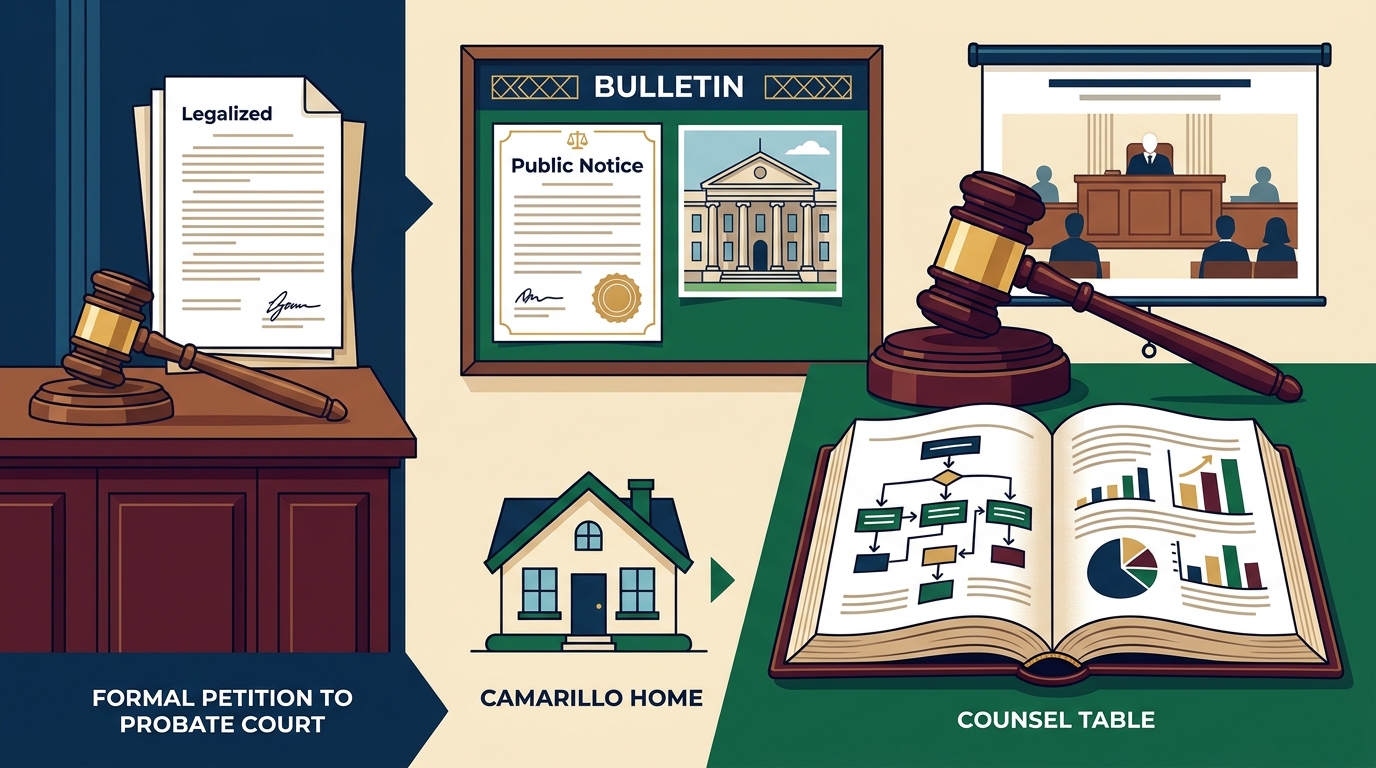
The court approval process for selling a probate home in Camarillo involves a formal petition to the probate court, a mandatory public notice, and a final hearing where the judge confirms the sale terms. This procedure ensures that the estate's assets are sold fairly and that all beneficiaries are protected. For families navigating this complex transition, understanding the specific steps of the Ventura County Superior Court process is essential to avoid delays and protect the property's value. Mark Patton & Associates provides specialized guidance for these transactions, helping clients move through the legal requirements with clarity and confidence.
The Initial Petition and Inventory Requirements
The first step in the court approval process is filing a petition for sale with the Ventura County Superior Court. This document must include a detailed inventory and appraisal of the estate's assets, including the Camarillo property. The court requires this information to determine if the sale is in the best interest of the estate. An independent appraiser usually provides the valuation, which serves as the baseline for the final sale price. If the property is part of a larger estate, the petition must also address how the proceeds will be distributed among the beneficiaries.
Public Notice and the Creditor Protection Period
Once the petition is filed, the court orders a public notice to be published in a local newspaper. This notice informs potential creditors and interested parties that the property is up for sale. In California, there is a statutory period, typically 30 days, during which creditors can file claims against the estate. This period is critical because it ensures that any valid debts are settled before the sale proceeds are distributed. If no claims are filed, the court can proceed to the next stage. If claims are filed, the court may need to hold a hearing to resolve them before approving the sale.
The Confirmation Hearing and Judicial Review
The confirmation hearing is the most significant part of the probate sale process. During this hearing, the judge reviews the offers received and determines if the sale is fair and reasonable. The judge will compare the final offer to the appraised value and the market conditions in Camarillo. If the judge finds the sale to be in the best interest of the estate, they will issue an order confirming the sale. This order makes the sale final and binding, meaning the buyer cannot easily back out. The judge may also set conditions for the sale, such as requiring the property to be sold in its current condition or allowing for specific repairs.
Strategic Considerations for Camarillo Properties
Properties in Camarillo often have unique characteristics that can affect the court's decision. For example, homes in established neighborhoods like the Camarillo Hills or near the downtown area may have higher appraised values. The court will consider these local market factors when reviewing the sale. Additionally, if the property has significant equity, the judge may require a higher offer to ensure the estate is not undervalued. Working with a local real estate professional who understands the Camarillo market can help present a strong case to the court. Mark Patton & Associates has extensive experience with probate sales in this area and can help prepare the necessary documentation for the hearing.
Post-Confirmation Steps and Closing
After the court confirms the sale, the transaction moves to the closing phase. The buyer and seller's attorneys will prepare the final documents, including the deed and the settlement statement. The court's order will specify how the proceeds are to be handled, such as paying off any remaining debts or distributing funds to the beneficiaries. The closing typically takes place at a title company or law office. Once the funds are disbursed, the probate case for that asset is closed. It is important to note that the court's approval does not guarantee a specific closing date, as the title company must still complete its due diligence. However, the process is generally straightforward once the judicial order is in place.
Key Takeaways
- The court approval process begins with a petition and a detailed inventory of the estate's assets.
- A public notice is required to inform creditors and interested parties of the pending sale.
- The confirmation hearing is where the judge reviews the offers and approves the sale terms.
- Local market conditions in Camarillo can influence the court's decision on the final sale price.
- Working with a specialized real estate professional can help navigate the legal requirements efficiently.
- Post-confirmation steps include preparing final documents and disbursing the sale proceeds.
Frequently Asked Questions
How long does the court approval process take in Camarillo?
The process typically takes 30 to 60 days, depending on the complexity of the estate and the court's schedule. The 30-day public notice period is a fixed requirement, but additional time may be needed if there are disputes or complex asset issues.
Can the court reject a sale offer?
Yes, the court can reject an offer if it determines that the price is not fair or that the sale is not in the best interest of the estate. The judge has the discretion to require a higher offer or to deny the sale entirely if the terms are unfavorable.
Who pays for the court fees and publication costs?
The estate typically pays for the court fees and the cost of publishing the public notice. These expenses are deducted from the sale proceeds before the remaining funds are distributed to the beneficiaries.
Is an independent appraiser required?
Yes, California law generally requires an independent appraisal of the property before it can be sold through probate. The appraiser must be licensed and have no conflict of interest with the estate or the beneficiaries.
What happens if the property is sold before the court hearing?
Selling the property before the court hearing is generally not allowed. The court must approve the sale terms before the contract becomes binding. Any attempt to sell the property without court approval can result in legal penalties and the invalidation of the sale.
Can beneficiaries object to the sale?
Yes, beneficiaries have the right to object to the sale if they believe it is not in their best interest. They can file a formal objection with the court, which may lead to a hearing where the judge reviews the objection and makes a final decision.
Conclusion
Navigating the court approval process for a probate home sale in Camarillo requires careful attention to legal details and local market dynamics. By understanding the steps from petition to confirmation, families can ensure a smooth and fair transaction. Mark Patton & Associates is dedicated to providing expert guidance for these complex sales, helping clients protect their equity and achieve their goals. To discuss your specific situation, for a personalized consultation.